
IEC 60900 and VDE Insulated Tools: A Practical Guide for Professional Buyers
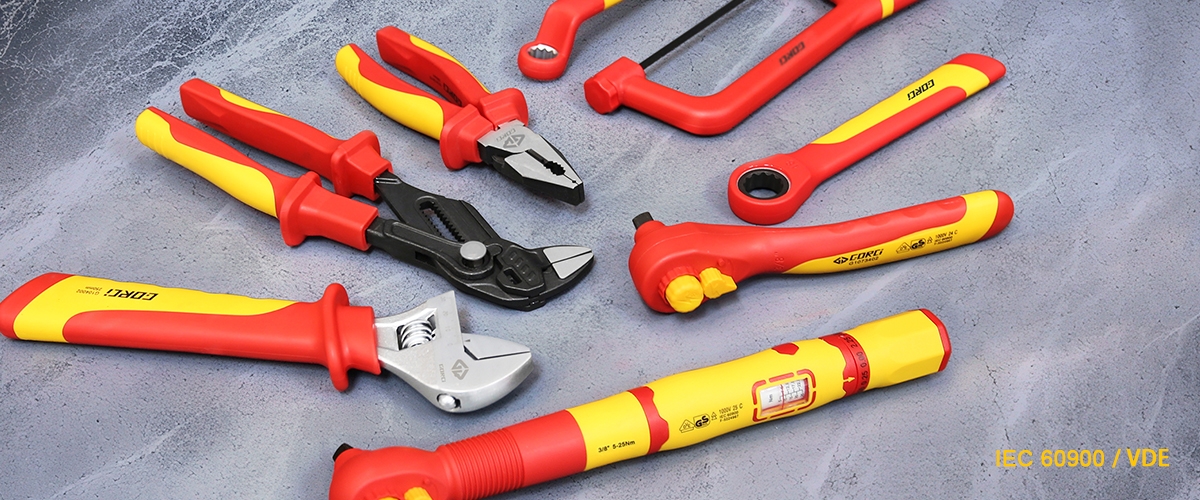
IEC 60900 and VDE Insulated Tools: A Buyer’s Guide
Learn what IEC 60900 means for insulated hand tools, how to evaluate VDE-certified tools, and which quality checks professional tool buyers should consider.
01
Why Electrical Safety Standards Matter When Buying Insulated Tools
For electrical contractors, industrial maintenance teams, and tool distributors, purchasing insulated hand tools involves more than comparing prices and product appearances.
Tools used in electrical work must be suitable for their intended applications. Their insulation, mechanical construction, markings, and supporting documentation all play a role in evaluating product suitability.
IEC 60900 provides internationally recognized requirements for insulated, insulating, and hybrid hand tools intended for live working or work close to live parts under specified conditions. Understanding this standard can help professional buyers ask better questions when sourcing insulated tools.
02
What Is IEC 60900?
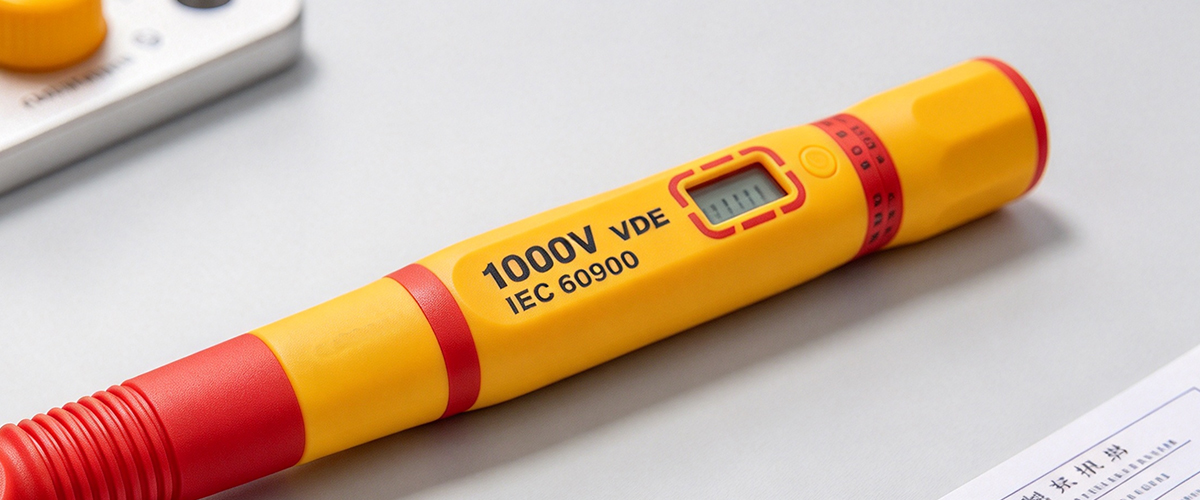
IEC 60900 is an international standard covering relevant design, construction, testing, and marking requirements for insulated hand tools.
Tools within its scope are intended for applications involving nominal voltages up to 1,000V AC and 1,500V DC, subject to the standard’s provisions and the tool’s applicable rating.
It is important to distinguish the scope of a standard from the approval of an individual product. Buyers should confirm the product’s actual markings, technical documentation, certification status where applicable, and intended use.
03
VDE Certification vs. Insulated Tool Design
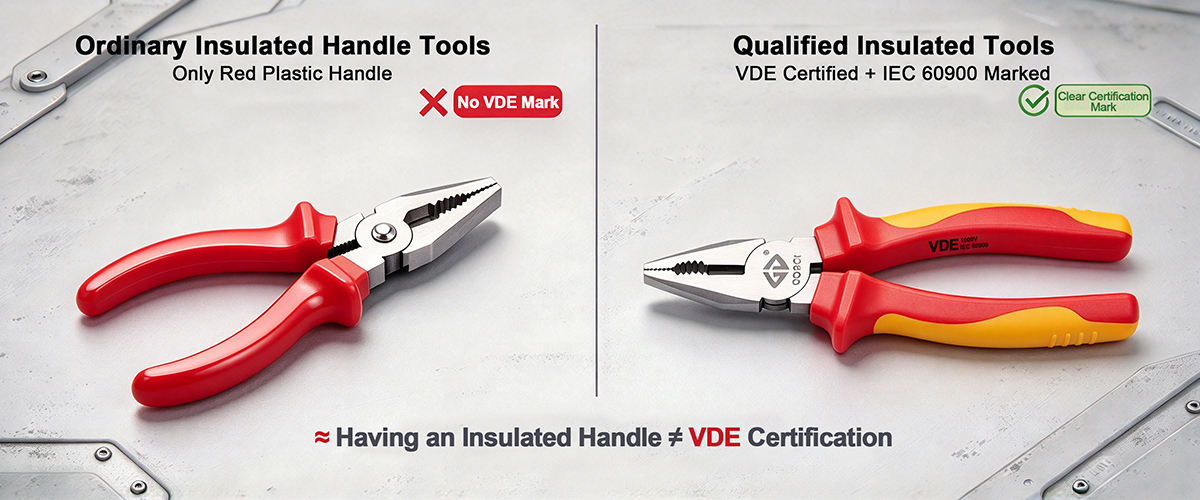
The terms “VDE tools” and “insulated tools” are frequently used in the electrical tool market, but they should not be treated as interchangeable proof of certification.
An insulated handle may be designed to provide electrical protection, but its appearance alone does not establish compliance with a recognized standard.
Similarly, references to IEC 60900 do not automatically prove that every product has obtained third-party certification.
When evaluating a supplier, professional buyers should establish whether a product has been independently certified, tested by the manufacturer, or assessed through another documented conformity process. These are different claims and should be represented accurately.
04
Five Quality Factors to Check Before Purchasing Insulated Tools
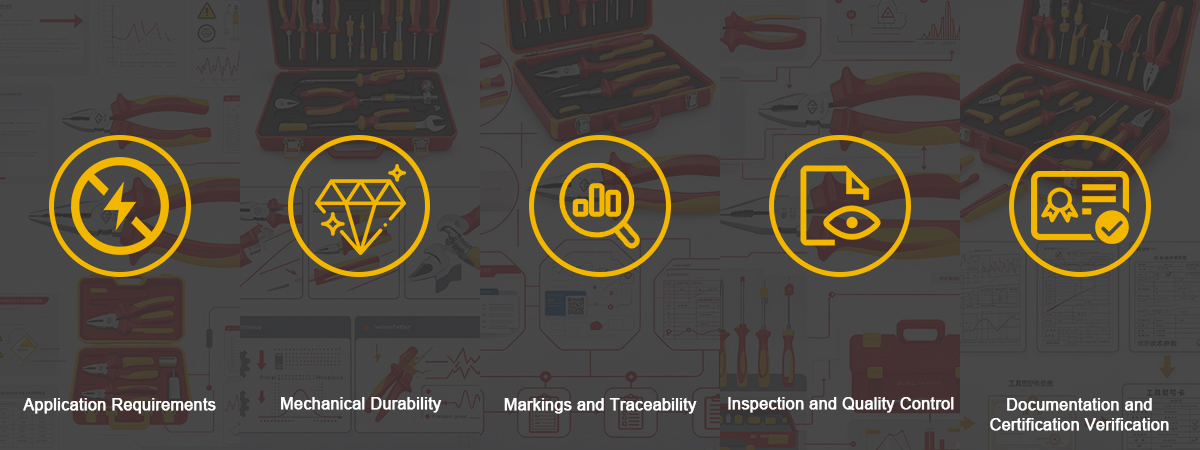
1. Insulation Performance
The insulation system should be appropriate for the tool’s intended electrical application. Ask for relevant test reports, product specifications, and supporting documentation.
2. Mechanical Durability
Insulated tools must also perform their mechanical function. Pliers should grip and cut as designed, screwdrivers should fit compatible fasteners, and wrenches should meet the relevant application requirements.
Mechanical quality and electrical insulation performance should be assessed separately.
3. Markings and Traceability
Professional tools should have clear and durable identification appropriate to their requirements. Buyers should check product references, applicable standard markings, voltage information, and available batch or traceability records.
4. Inspection and Quality Control
A reliable manufacturing process should include appropriate incoming material checks, in-process inspections, and final quality controls.
Depending on the tool and applicable requirements, testing may address voltage withstand, insulation adhesion, resistance to impact, marking durability, and other relevant characteristics.
5. Documentation and Certification Verification
Before placing a large order, request the applicable certificates, test reports, technical specifications, and product identification details.
Where third-party certification is claimed, verify that the documentation applies to the exact product or product family being purchased. A certificate for one model should not automatically be assumed to cover every tool in a supplier’s catalogue.
05
Why the Manufacturer’s Laboratory Matters
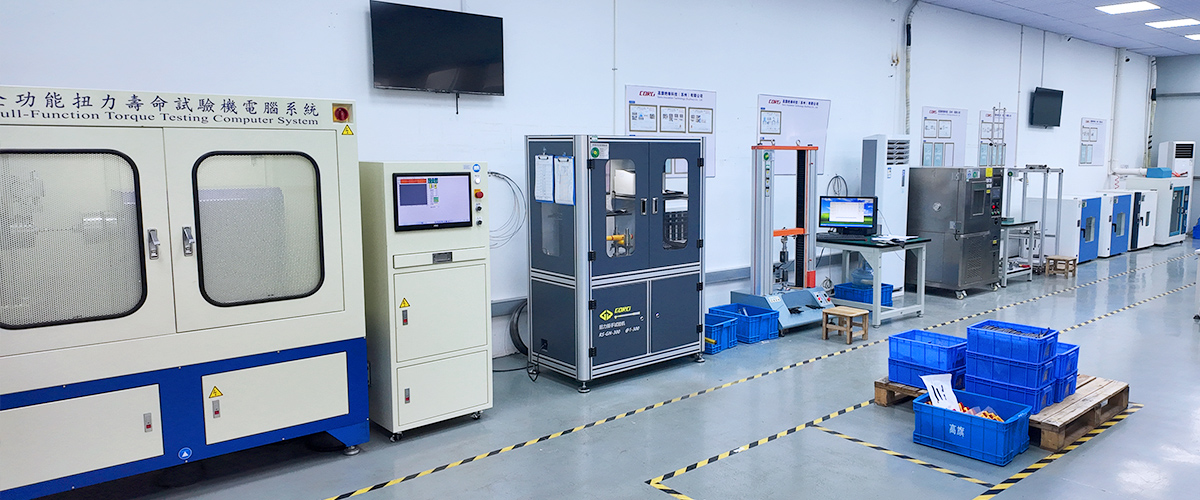
A dedicated testing laboratory can support production quality management by helping identify problems before products reach customers.
SANTU’s website presents the SANTU VDE laboratory and describes testing activities including voltage withstand, insulation adhesion, cold shock, pressure, combustion, and marking durability.
For professional buyers, laboratory capability is a useful part of supplier evaluation. It should be considered alongside applicable certification documents, quality management procedures, manufacturing capability, and product-specific evidence.
Buyers should always confirm which tests and certifications apply to the exact models under consideration.
06
Choosing the Right Insulated Tool Supplier
When comparing suppliers, consider the following questions:
✔ Can the supplier provide the required tool types and sizes?
✔ Are the applicable standards and voltage ratings clearly documented?
✔ Is the certification status of each model transparent?
✔ Does the supplier have a defined quality inspection process?
✔ Can the supplier support distributor requirements, packaging, and product documentation?
✔ Are lead times, minimum order quantities, and after-sales arrangements suitable for your business?
These factors can help importers and distributors evaluate suppliers beyond the initial unit price.

07
Explore SANTU VDE Tools
SANTU VDE Tools offers an insulated tool range covering screwdrivers, pliers, wrenches, torque wrenches, and insulated tool sets for professional applications.
If you are sourcing insulated tools for electrical contractors, industrial maintenance, or distribution, review the available products and confirm the applicable documentation for your selected models.
Visit the SANTU VDE insulated tools product range or learn more about the SANTU VDE laboratory.
Contact SANTU Tools to discuss insulated tool specifications, quality requirements, and product sourcing for your market.